
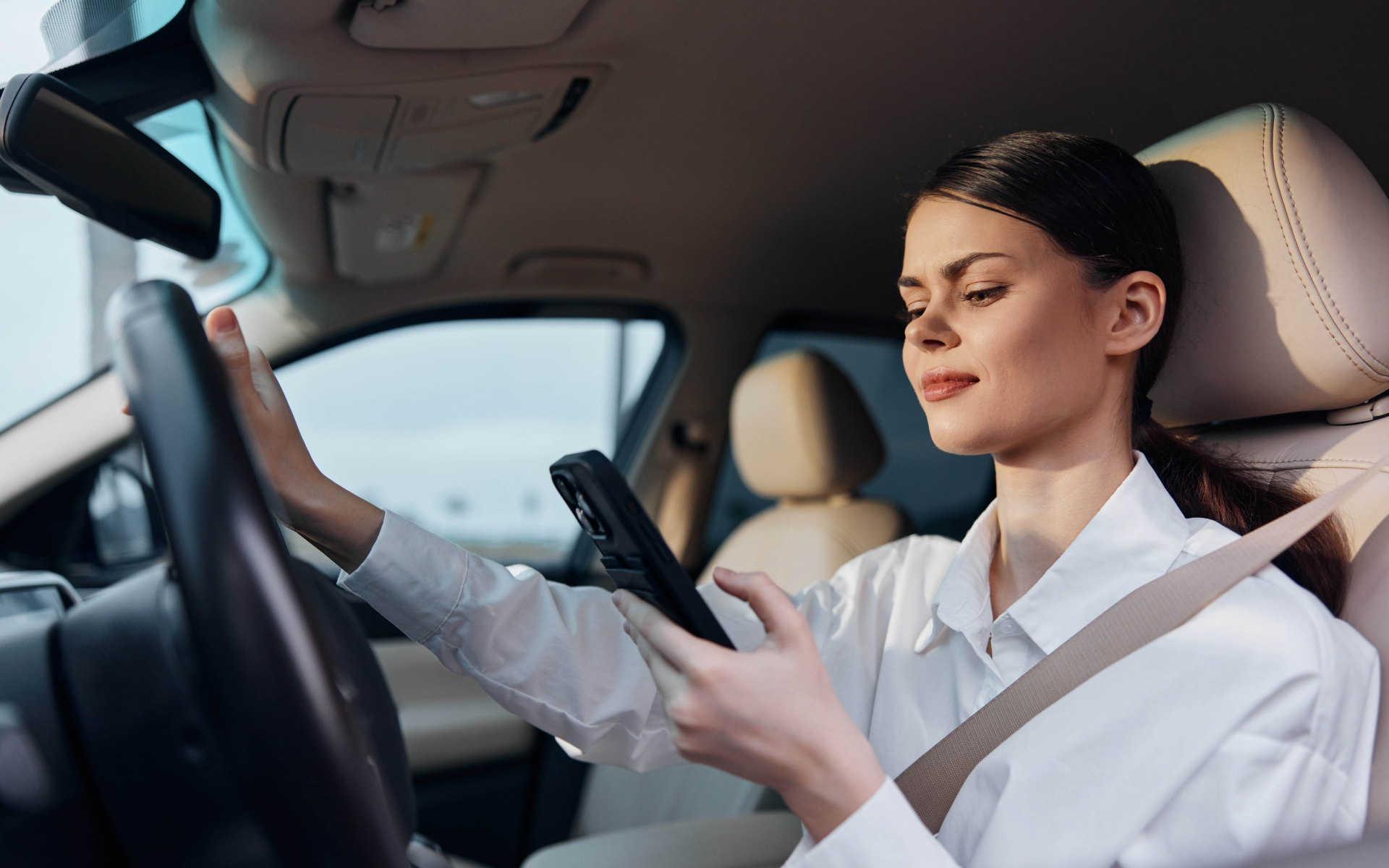


Proving that a driver was distracted at the time of the crash requires gathering specific evidence quickly. Phone records, surveillance footage, and witness statements are among the most powerful tools, but they can disappear if you wait too long after the collision.
- Cell phone records: Phone records can show call and text timing, while device data or forensic evidence may be needed to prove app use, browsing, or other activity near the time of the crash.
- Traffic and surveillance camera footage: Recordings from nearby businesses, traffic cameras, or dashcams may capture the driver’s behavior
- Police reports: Officers may note device use or signs of distraction at the scene
- Eyewitness statements: Other drivers, passengers, or pedestrians who saw the at-fault driver looking at a phone
- Event data recorder (EDR) data: Many modern vehicles record speed, braking, and steering inputs before impact
- Social media posts: Posts by the at-fault driver near the time of the crash can sometimes support an inference of phone use or distraction