
Rated 5.0
Rear-End Collisions in Queens
out of ( 171 ) Google Reviews
As Seen On
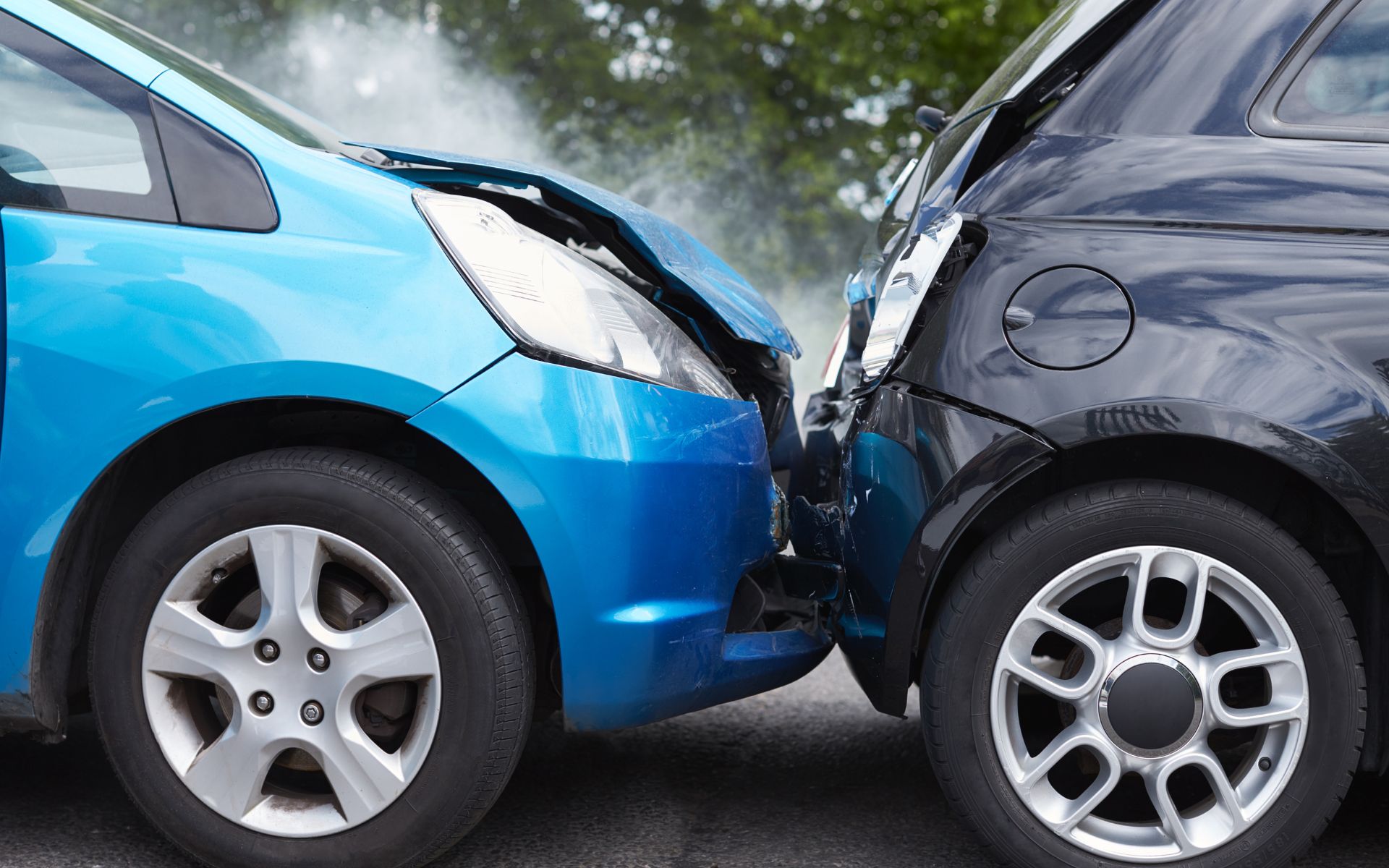
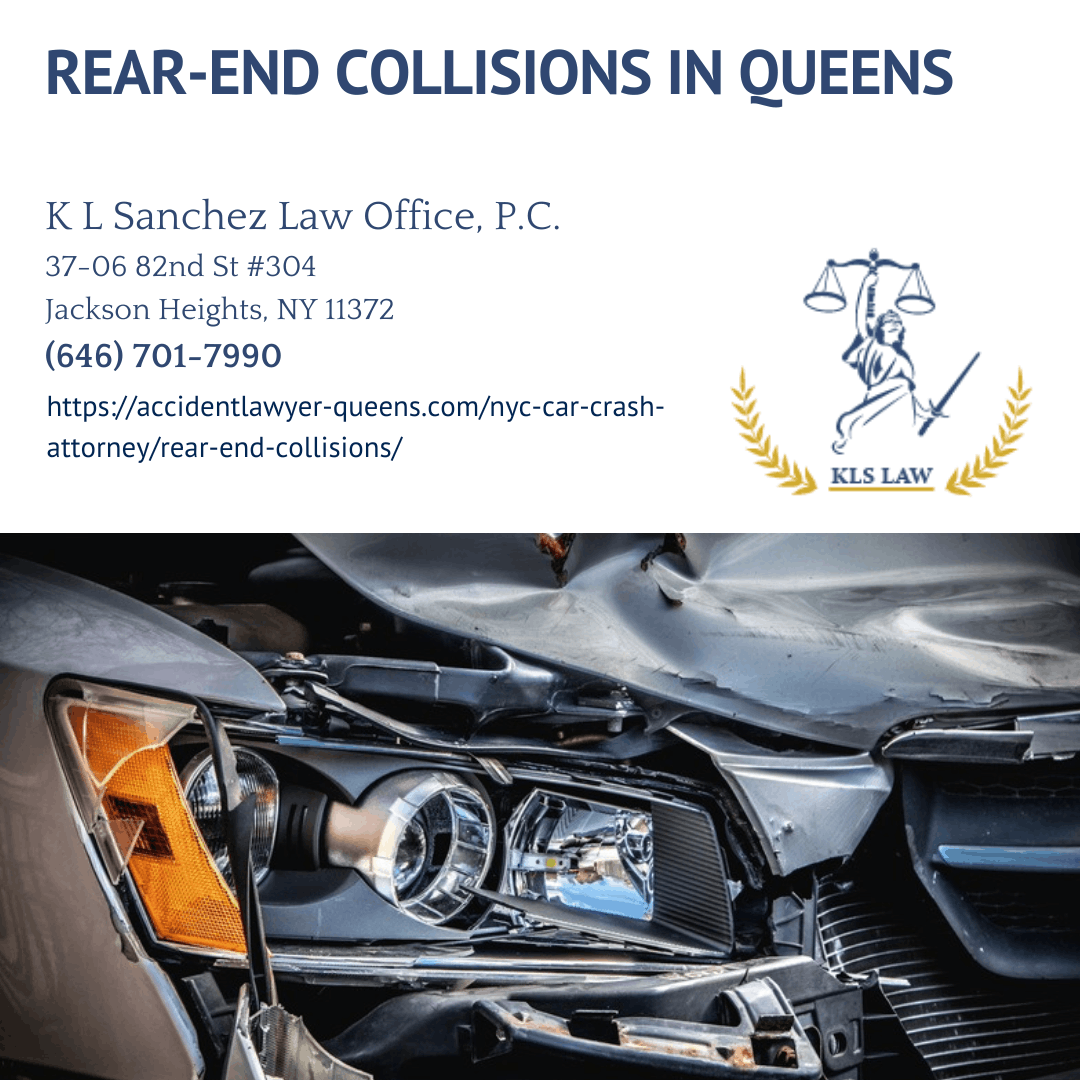
Rear-end collisions are among the most common crashes in New York, particularly on busy corridors like Roosevelt Avenue in Jackson Heights. New York Vehicle and Traffic Law §1129(a) requires drivers to follow at a reasonable and prudent distance. In many rear-end cases, New York courts often treat a rear-end collision with a stopped or stopping vehicle as a prima facie case of negligence against the rear driver.
Queens car accident attorney Keetick L. Sanchez of K L Sanchez Law Office, P.C. has investigated and prosecuted hundreds of personal injury cases and represents car accident victims throughout Queens, from Astoria to Jamaica to Flushing. Our office, based in Jackson Heights, represents Queens rear-end collision victims and works to recover the compensation they deserve.
This guide covers who is at fault in a Queens rear-end crash, how New York’s following distance law works, what injuries victims commonly suffer, how no-fault insurance applies, when you can file a lawsuit, what compensation is available, common mistakes to avoid, and how an attorney can help. Call K L Sanchez Law Office, P.C. at (646) 701-7990 to speak with an experienced Queens attorney about your case today.
Google Review by
I would like to thank the KL Sánchez group and the lawyer Sanchez, for helping my mother and myself to fight the lawsuit in a car accident which turned out to be favorable to us due to the experience and the good work done. Likewise for Sonita Espinoza, who is the paralegal who assisted me in this almost 2-year process. I highly recommend this defense group for car accident cases, criminal defense, construction falls. Thank you very much and God bless you for your good work. Edwin Morazan.
Who Is at Fault in a Queens Rear-End Crash?
The rear driver is often presumed negligent in a Queens rear-end collision, but fault is not automatic in every case. New York courts generally treat a rear-end collision with a stopped or stopping vehicle as a prima facie case of negligence against the rear driver.
However, the New York Court of Appeals case Tutrani v. County of Suffolk, 10 N.Y.3d 906 (2008), highlights that the lead driver can also share the blame. In that case, the court ruled that a front driver who stops abruptly or recklessly in a travel lane can be held responsible for setting off a chain reaction, showing how both drivers can be at fault in an accident rather than placing all responsibility on the rear driver.
What Is New York’s Following Distance Law?
VTL §1129(a) requires every driver to follow the vehicle ahead at a “reasonable and prudent” distance. The statute does not set a specific number of feet. Instead, drivers must adjust based on speed, traffic density, weather, and road conditions. Tailgating violates this standard and serves as the foundation of most rear-end liability claims filed in Queens.
Can the Rear Driver Argue They Weren’t at Fault?
Yes, but the burden falls on them. Under New York rear-end collision case law, the rear driver must provide a non-negligent explanation for the collision to rebut the prima facie showing of negligence. Courts have accepted defenses such as:
- The lead vehicle made a sudden, unexpected lane change, had non-functioning brake lights, or stopped under unusual circumstances that courts may recognize as non-negligent.
- A mechanical failure (such as faulty brakes) made stopping impossible
- A third vehicle forced the rear driver into the collision
- A sudden, unavoidable road hazard made safe stopping impossible despite reasonable care
Even when a rear-end collision seems straightforward, the insurance company may still dispute speed, following distance, sudden stops, or pre-existing injuries. A focused car accident claim strategy can document how the crash happened and respond to fault arguments before they weaken the claim.
Key Takeaway: Under New York law, a rear-end collision with a stopped or stopping vehicle generally creates a prima facie case of negligence against the rear driver for failing to maintain a safe following distance.
Not sure who is liable for your Queens crash accident? Call K L Sanchez Law Office, P.C. at (646) 701-7990 for a free case review.
Google Review by
I just recently had an awesome experience with the team at K L Sanchez law office. The lawyer, Kettick Sanchez, was very professional and knowledgeable throughout the whole process, her assistant Kelly was also great at communicating and helping me with any concerns I had. Would definitely recommend their services due to their high quality of work and passion!
What Injuries Do Rear-End Collision Victims Suffer?
Rear-end collisions cause a wide range of injuries, from mild strains to life-altering trauma. The severity depends on the speed of impact, whether you were wearing a seatbelt, and the position of your body at the moment of the crash.
Soft Tissue and Whiplash Injuries
Whiplash is a common rear-end collision injury. It occurs when the sudden force of impact snaps the head and neck forward and backward, straining muscles, tendons, and ligaments. Symptoms like neck pain, headaches, dizziness, and shoulder stiffness may appear immediately, after 12 hours, or over the next few days. This delayed onset makes early medical documentation critical for both no-fault claims and any future lawsuit.
Serious and Catastrophic Injuries
Higher-speed rear-end crashes can cause far more severe harm, including the injuries listed below:
- Herniated or bulging discs in the cervical or lumbar spine
- Spinal cord damage leading to partial or full paralysis
- Traumatic brain injuries (TBI) from striking the steering wheel, headrest, or window
- Broken bones in the hands, wrists, ribs, or face
- Facial lacerations and dental injuries from airbag deployment
These injuries are significant because they often meet the threshold required to step outside New York’s no-fault system and file a lawsuit for full damages. Many Queens victims with these diagnoses qualify to pursue compensation beyond what PIP insurance provides.
Key Takeaway: Rear-end collisions frequently cause whiplash and soft tissue injuries that may not appear for 24 to 72 hours. Serious injuries, including some spinal injuries and traumatic brain injuries, may allow victims to pursue damages beyond no-fault benefits if they meet New York’s serious-injury threshold.
Hurt in a Queens rear-end crash? Keetick L. Sanchez can evaluate your injuries and your claim. Call (646) 701-7990 today.
How Does New York No-Fault Insurance Work?
New York’s no-fault insurance system, also called Personal Injury Protection (PIP), provides basic coverage to car accident victims regardless of who caused the crash. If you were rear-ended in Queens, the applicable no-fault insurer may pay first-party benefits for medical bills and partial lost wages. In many cases, this is the insurer for the vehicle you occupied; if you were a pedestrian, it may be the insurer for the vehicle that struck you.
What Does No-Fault Insurance Cover?
Basic no-fault benefits generally cover up to $50,000 in basic economic loss, including necessary medical expenses, lost earnings subject to statutory limits, and up to $25 per day for certain other reasonable and necessary expenses for up to one year. You must file your application with your own insurance company within 30 days of the accident. Missing this deadline can lead the insurer to deny no-fault benefits unless there is a clear and reasonable justification for the delay.
What Doesn’t No-Fault Cover?
No-fault insurance does not cover pain and suffering or emotional distress, and lost-earnings benefits are limited by statute. It also does not cover property damage to your vehicle. These gaps are why filing a personal injury lawsuit becomes critical for Queens victims with serious injuries.
Key Takeaway: New York’s no-fault PIP coverage pays medical bills and partial lost wages regardless of fault, but it does not cover pain and suffering.
Have questions about no-fault coverage after your Queens accident? Call K L Sanchez Law Office P.C. at (646) 701-7990 for answers.
When Can You Sue for a Rear-End Crash in New York?
Queens rear-end crash victims can file a lawsuit for pain and suffering only if their injuries meet New York’s serious injury threshold. This requirement is defined under Insurance Law §5102(d) and limits which accident victims can pursue claims beyond no-fault coverage.
What Qualifies as a Serious Injury in New York?
Under Insurance Law §5102(d), a serious injury includes any of the following:
- Death
- Dismemberment
- Significant disfigurement
- A fracture
- Loss of a fetus
- Permanent loss of use of a body organ, member, function, or system
- Permanent consequential limitation of use of a body organ or member
- Significant limitation of use of a body function or system
- A medically determined non-permanent injury that prevents the person from performing substantially all usual daily activities for at least 90 of the 180 days following the accident
Some rear-end injuries may qualify, but the diagnosis alone is not always enough. Medical proof must show that the injury fits at least one statutory serious-injury category. For example, a fracture may qualify, while a herniated disc or concussion typically requires evidence of a significant, consequential, or otherwise qualifying limitation.
What Is New York’s Statute of Limitations?
The statute of limitations for personal injury lawsuits in New York is three years from the date of the accident under CPLR §214. For a car-crash-specific deadline overview, see how long you have to file a car accident claim in New York. Several other deadlines also apply:
- No-fault written notice/claim: as soon as reasonably practicable, but generally no more than 30 days after the accident date
- Notice of claim (government vehicles): 90 days from the accident
- MV-104 crash report to NYS DMV: within 10 days if anyone is injured or killed, or if damage to one person’s property exceeds $1,000.
Missing any of these deadlines can weaken or eliminate your right to compensation. If you are unsure which deadlines apply to your case, speaking with an attorney as soon as possible is the safest course of action.
Key Takeaway: Queens rear-end crash victims must meet New York’s serious injury threshold under Insurance Law §5102(d) to sue for pain and suffering. The statute of limitations for personal injury lawsuits is three years from the accident date.
Worried about missing the statute of limitations? Call K L Sanchez Law Office, P.C. at (646) 701-7990 to protect your right to file.
What Compensation Can You Recover?
Queens rear-end collision victims may seek vehicle property-damage compensation and certain economic losses separately, but recovery for pain and suffering generally requires meeting New York’s serious-injury threshold. The compensation available in a Queens car accident case depends on the severity of injuries, the cost of treatment, the impact on your ability to work, and whether you share any fault.
Economic Damages
Economic damages compensate you for measurable financial losses, including the following:
- Past and future medical expenses (surgery, physical therapy, medication, imaging)
- Lost wages during your recovery period
- Lost future earning capacity if injuries prevent you from returning to your job
- Property damage to your vehicle
- Out-of-pocket costs like transportation to appointments and medical equipment
Non-Economic Damages
Non-economic damages cover losses that are real but harder to quantify, such as the following:
- Physical pain and suffering
- Emotional distress and anxiety
- Loss of enjoyment of life
- Loss of consortium (impact on your relationship with a spouse)
Pain and suffering are not available through no-fault benefits. To pursue non-economic damages, you generally need a personal injury claim or lawsuit and proof that your injuries meet New York’s serious-injury threshold.
How Does Comparative Negligence Affect Your Payout?
New York follows a pure comparative negligence rule under CPLR §1411. You can recover damages even if you were partially at fault, but your compensation is reduced by your percentage of responsibility. For example, if a jury awards $100,000 in damages and finds you 20% at fault, you receive $80,000. Unlike some states, New York does not bar recovery at any fault percentage, which means even a majority-at-fault plaintiff can recover a portion of their damages.
Key Takeaway: New York’s pure comparative negligence rule allows rear-end crash victims to recover damages even if they were partially at fault, but compensation is reduced by their percentage of responsibility.
Want to know what your Queens rear-end collision case may be worth? Call Keetick L. Sanchez at (646) 701-7990 for an honest assessment.
Google Review by
Dealing with the aftermath of a car accident was tough, but having this Keetick by my side made all the difference. Her skill in the courtroom and compassion during my recovery period were more than I could have asked for. Truly the best in Queens.
ABOGADOS QUE HABLAN ESPAÑOL!
Schedule a Free Consultation
(Consulta Gratis)
Car Accident Attorney in Jackson Heights, Queens: K L Sanchez Law Office, P.C.

Keetick L. Sanchez, Esq.
Keetick L. Sanchez is a lifelong New York resident and the founder of K L Sanchez Law Office. Before attending law school, she worked as a trial litigation paralegal on personal injury actions including motor vehicle accidents, Labor Law cases, and slip-and-fall claims. After graduating from Touro College Jacob D. Fuchsberg Law School, she continued her career as a personal injury litigator at a New York City firm, where she investigated and prosecuted hundreds of personal injury cases.
She is admitted to practice law in New York and in the State of Texas. K L Sanchez Law Office, P.C. provides personalized attention to every rear-end collision case, offers free consultations, and handles cases on a contingency fee basis. K L Sanchez Law Office, P.C. serves clients in both English and Spanish.
What Steps Should You Take After a Rear-End Crash in Queens?
The steps you take in the first hours and days after a rear-end crash can protect both your health and your legal rights. Acting quickly matters.
At the Scene
If you are physically able, take these steps at the scene before leaving:
- Stay at the scene and move your vehicle to a safe location if possible
- Call 911 to report the crash, especially if anyone is injured
- Exchange information with the other driver (license, insurance, registration)
- Photograph vehicle damage, road conditions, traffic signals, and any visible injuries
- Identify witnesses and collect their contact information
- Note nearby cameras, including traffic, bus, dashcam, business, building, or rideshare cameras, because footage may be time-sensitive
After You Leave the Scene
Seek medical attention immediately, even if you feel fine. Some injuries may develop or worsen after the crash, so prompt medical evaluation is important. A gap in medical care gives insurance adjusters a reason to dispute your claim.
You must also:
- File a no-fault PIP application with your own insurer within 30 days
- File a Report of Motor Vehicle Crash (MV-104) with the NYS DMV within 10 days if property damage exceeds $1,000
- Preserve all medical records, bills, receipts, and insurance correspondence
Key Takeaway: After a Queens rear-end crash, seek medical care immediately, document everything at the scene, preserve any police report, and notify your insurance company within 30 days to protect your no-fault benefits. Delays in medical treatment can hurt both your health and your claim.
Google Review by
The legal office of Lawyer K L Sánchez, provided us with an excellent service with very qualified personnel, Lawyer Sánchez is a very professional, very qualified and very responsible person, in the same way Ms. Yenny is a very professional and qualified person, they They show interest and concern for your case and do not rest until it is 100% resolved, which I certainly recommend. For my part you have my gratitude and thanks.
Learn More
What Mistakes Can Hurt Your Queens Rear-End Claim?
The most damaging mistake Queens rear-end victims make is waiting too long to see a doctor or accepting an early settlement before understanding the full scope of their injuries. Both can permanently reduce your compensation.
Common mistakes that weaken rear-end collision claims include the following:
- Admitting fault or apologizing at the scene (even casual statements can be used against you)
- Delaying medical treatment, creating gaps that insurers can point to as proof that your injuries are unrelated
- Giving a recorded statement to the at-fault driver’s insurer without legal counsel
- Accepting a quick settlement before your injuries are fully diagnosed
- Missing the 30-day no-fault PIP filing deadline
- Failing to file the MV-104 crash report within 10 days when damage exceeds $1,000
- Posting about the accident or your injuries on social media
Key Takeaway: One of the most damaging mistakes Queens rear-end victims make is delaying medical care or accepting an early settlement offer. Both can permanently reduce or eliminate compensation for serious injuries.
Avoid costly mistakes. Talk to Keetick L. Sanchez before speaking to any insurance company. Call (646) 701-7990 to schedule a consultation.
Why Does Location Matter in Queens Rear-End Cases?
Queens presents unique challenges for rear-end collision claims. The borough is one of New York City’s most heavily trafficked areas, and its roadways create the kind of stop-and-go conditions that lead to rear-end crashes every day.
Busy Queens roads and areas where rear-end crashes may occur include the following:
- Grand Central Parkway and the Brooklyn-Queens Expressway (BQE), where highway merges and sudden slowdowns are frequent
- Northern Boulevard, which runs through dense commercial areas with constant stopping
- Roosevelt Avenue in Jackson Heights and Junction Boulevard, both heavily used by buses, pedestrians, and rideshare vehicles
- Intersections near LaGuardia Airport, where taxi and rideshare traffic creates unpredictable stopping patterns
Crashes involving MTA buses, Uber and Lyft vehicles, or commercial trucks add complexity because multiple insurance policies (and sometimes government entities) may be involved. Whether the NYPD responds to the scene and generates a police report also affects the strength of your claim.
Queens Neighborhoods We Serve
K L Sanchez Law Office, P.C. represents rear-end collision victims throughout Queens, including Sunnyside, Elmhurst, Corona, Bayside, Rego Park, Kew Gardens, Richmond Hill, Howard Beach, and Ozone Park.
K L Sanchez Law Office, P.C. is based in Jackson Heights. Call (646) 701-7990 to work with a Queens attorney who knows this borough.
Get Help from a Queens Rear-End Collision Attorney Today
If you or someone close to you was rear-ended in Queens, you do not have to face the insurance companies alone. Whether you are dealing with whiplash, a herniated disc, or more serious injuries, you may be entitled to compensation well beyond what no-fault insurance will pay. The window to act is limited.
At K L Sanchez Law Office, P.C., Keetick L. Sanchez will explain your rights, identify every possible source of recovery, and outline the steps needed to protect your claim, with no obligation.
Do not wait until evidence is lost or a deadline passes. Call (646) 701-7990 or visit K L Sanchez Law Office, P.C. online to schedule your free consultation with a Queens car accident attorney today.
Google Review by
I had a really good experience working with my lawyer Keetick Sanchez. She greatly helped me through a stressful time in my life and made the whole process go very smooth. Ms. Sanchez’s paralegal Sonia Espinoza was always available and took the time to answer all of my questions. Neither of them ever rushed me through anything, rather they provided me with thoughtful support and advice.
Frequently Asked Questions About Rear-End Collisions in Queens
Is the rear driver always at fault in a New York rear-end crash?
New York law presumes the rear driver is at fault under VTL §1129(a) for failing to maintain a safe following distance. This presumption can be rebutted if the rear driver proves a non-negligent explanation, such as a sudden stop by the lead vehicle with no warning or non-functioning brake lights. Successfully rebutting the presumption is difficult, and courts apply the standard strictly.
How long do I have to file a rear-end collision lawsuit in Queens?
You generally have three years from the date of the accident to file a personal injury lawsuit under CPLR §214. However, your no-fault insurance claim must be filed within 30 days, and if a government vehicle was involved, a notice of claim must be filed within 90 days. Missing any of these shorter deadlines can compromise your ability to recover full compensation.
What if the other driver's insurance denies my claim?
If the at-fault driver’s insurer disputes liability or your injuries, you may still challenge the denial and, when appropriate, file a personal injury lawsuit. Uninsured or underinsured motorist coverage may apply only in specific situations, such as when the at-fault driver is uninsured, unidentified, or lacks enough coverage, subject to your policy terms.
What if I was partially at fault for the rear-end crash?
New York follows pure comparative negligence under CPLR §1411, meaning you can recover damages even if you were partially at fault. Your total compensation is reduced by your percentage of responsibility. If you are 25% at fault, you recover 75% of your total damages.
Do I need a police report to file a rear-end collision claim in Queens?
A police report is not required for a property-damage-only collision in Queens, but a DMV MV-104 report must be filed within 10 days if the crash caused injury, death, or more than $1,000 in damage to any one person’s property.