
As Seen On


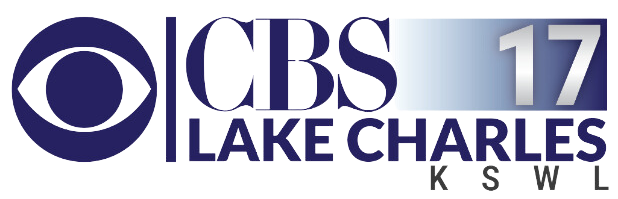

A head-on collision can cause devastating injuries and leave victims facing medical treatment, lost income, and uncertainty about what comes next. When another driver crosses the center line or travels the wrong way, injured people may have the right to seek compensation under New York law.
K L Sanchez Law Office, P.C. represents people injured in head-on collisions throughout New York and helps them pursue compensation for their losses. Queens car accident lawyer Keetick L. Sanchez investigates the circumstances of serious collisions and helps injured clients understand their legal options. Our team investigates who was responsible and handles the legal process on behalf of injured clients.
This page covers the causes of head-on collisions, liability, common injuries, compensation, evidence, and important filing deadlines. If you were injured in a head-on crash in Queens, contact K L Sanchez Law Office at (646) 701-7990 for a free consultation.
Google Review by
I would HIGHLY RECOMMEND! I will give more than 5 stars if I could! They are really so helpful and knowledgable. The team always made sure our case was up to date, especially YENNY. She’s one of a kind! She’s always there when I need her! So polite and so kind. We are so grateful to Attorney Sanchez and her team for winning our case!!! Thank you so much K L Sanchez Law Office!
What Is a Head-On Collision Under New York Law?
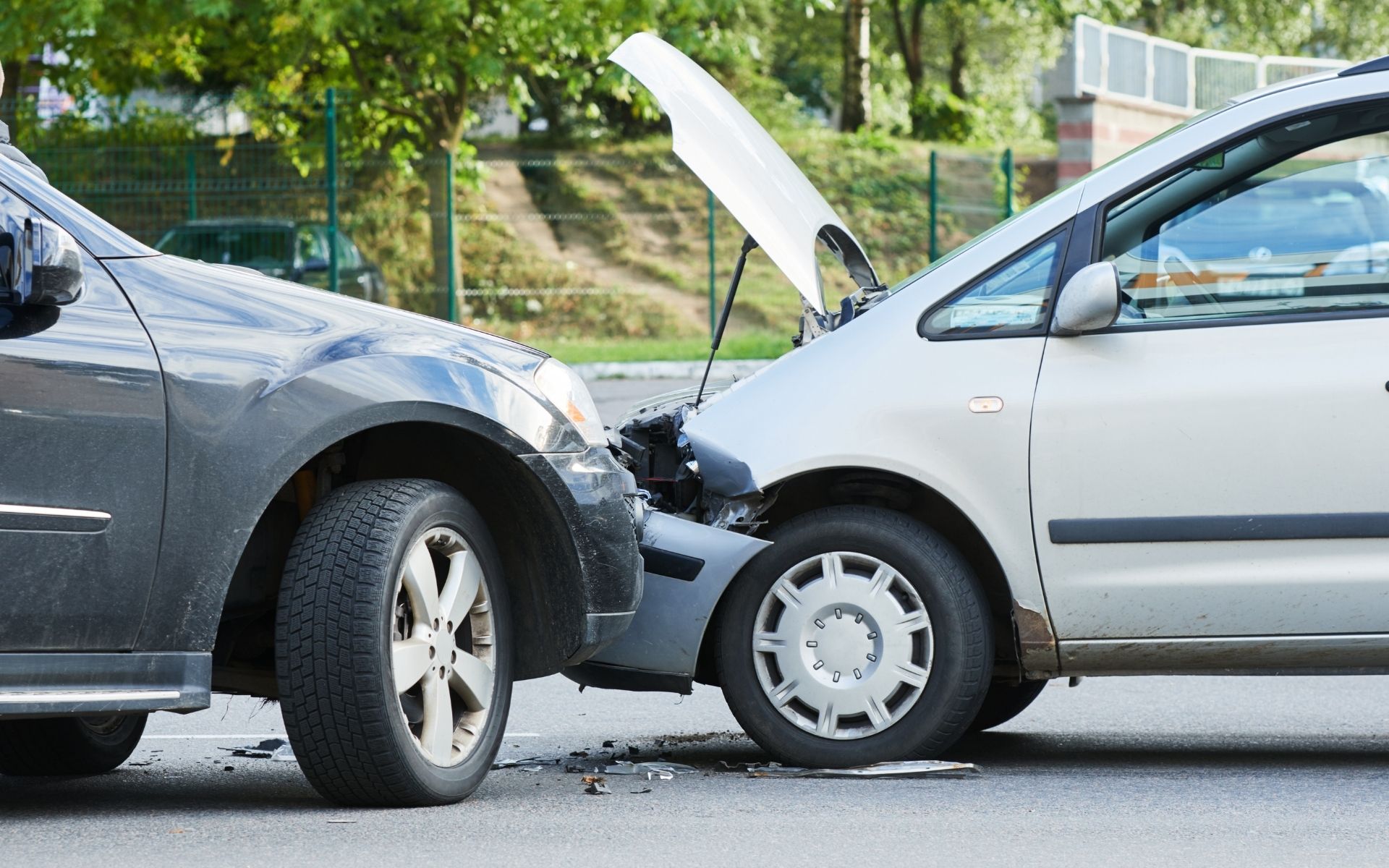
A head-on collision occurs when vehicles traveling in opposite directions collide front-to-front. These crashes often happen when a driver crosses the center line, drifts into oncoming traffic, or travels the wrong way on a roadway. Unlike rear-end and sideswipe crashes, head-on collisions involve the fronts of opposing vehicles.
Under New York Vehicle and Traffic Law § 1128(a), a vehicle must remain as nearly as practicable within a single lane and cannot leave that lane until the driver determines that the movement can be made safely. Crossing into oncoming traffic in violation of this rule can serve as evidence of negligence in a head-on collision claim.
Head-on crashes can result in severe injuries and significant vehicle damage when vehicles traveling in opposite directions collide. Determining why a vehicle entered oncoming traffic is an important part of establishing liability.
Key Takeaway: A driver who leaves a marked lane without first determining that the movement can be made safely can violate New York Vehicle and Traffic Law § 1128(a), which can be relevant when determining fault in a head-on collision.
Evidence from a head-on crash can help show how a vehicle entered opposing traffic. Contact K L Sanchez Law Office at (646) 701-7990 to discuss the evidence available in your case and the next steps for protecting your claim.
What Causes Head-On Collisions in Queens?
Head-on collisions in Queens often occur when a driver leaves the proper lane or travels the wrong way. One-way streets, highway ramps, heavy traffic, and changing road conditions can increase the risk of a vehicle entering oncoming traffic.
Wrong-Way Driving and Lane Departure
A driver can enter opposing traffic after misreading a one-way sign, crossing the center line, or entering a highway ramp in the wrong direction. Darkness, poor visibility, unfamiliar roads, and navigation errors can make it harder to recognize and correct these mistakes in time.
Distracted or Drowsy Driving
Texting, checking a phone, or adjusting a navigation app can take a driver’s attention away from the road and lead to a lane departure. Fatigue can also cause a driver to lose focus, fall asleep, and drift into oncoming traffic.
Impaired Driving
Alcohol and drug impairment can affect judgment, reaction time, and a driver’s ability to stay within the proper lane. An impaired driver can enter opposing traffic or fail to correct a lane departure before a collision occurs.
Mechanical Failure and Road Conditions
A tire blowout, brake failure, or steering defect can cause a driver to lose control and enter an opposing lane. Faded lane markings, poor visibility, and construction zones can also make it more difficult to identify and remain within the proper travel lane.
The cause of a head-on collision can affect who is held responsible for the resulting injuries and losses. Call K L Sanchez Law Office at (646) 701-7990 to have your Queens head-on collision case reviewed.
Google Review by
I would like to thank the KL Sánchez group and the lawyer Sanchez, for helping my mother and myself to fight the lawsuit in a car accident which turned out to be favorable to us due to the experience and the good work done. Likewise for Sonita Espinoza, who is the paralegal who assisted me in this almost 2-year process. I highly recommend this defense group for car accident cases, criminal defense, construction falls. Thank you very much and God bless you for your good work. Edwin Morazan.
What Injuries Do Head-On Collision Victims Suffer?
Head-on collisions can cause severe injuries due to abrupt deceleration, vehicle crush, and intrusion into the passenger compartment. Injury severity depends on factors such as vehicle speed, vehicle size and structure, impact location, and restraint use.
Catastrophic and Life-Altering Injuries
A head-on crash can result in serious injuries that require extensive treatment and long-term care, including:
- Traumatic brain injuries
- Spinal cord injuries and paralysis
- Fractures of the legs, hips, arms, and ribs
- Internal bleeding and organ damage
- Amputation and crush injuries
Other Common Injuries
Head-on collisions can also cause whiplash, neck and back injuries, chest trauma, and lacerations. Some injuries can lead to chronic pain, scarring, limited mobility, or an extended recovery.
Key Takeaway: Head-on collisions can cause injuries ranging from whiplash and fractures to traumatic brain and spinal cord injuries, with the severity depending on the circumstances of the impact.
Medical records can help document the extent of an injury and its effect on a head-on collision claim. For help understanding the next steps after a serious crash in Queens, call K L Sanchez Law Office at (646) 701-7990.
Head-On Collision Attorney in Queens - K L Sanchez Law Office, P.C.

Keetick L. Sanchez, Esq.
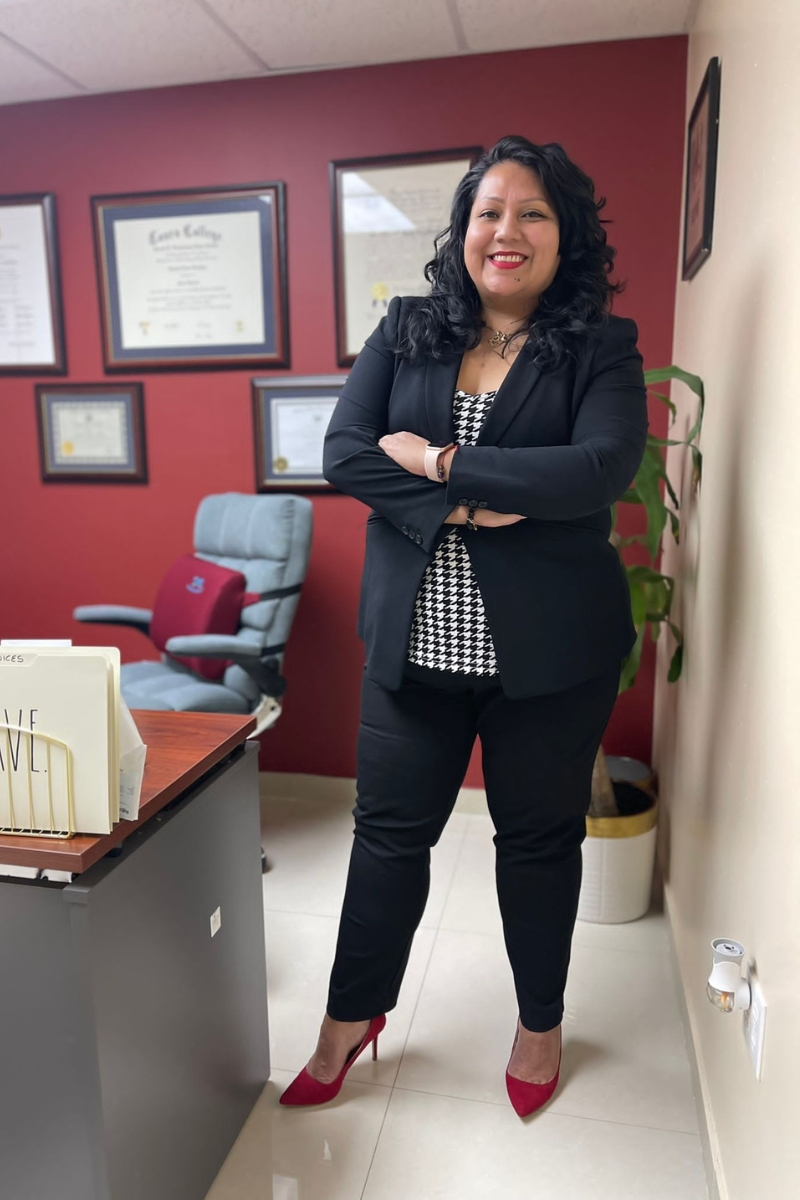
Keetick L. Sanchez is a New York attorney who represents people injured in car accidents throughout New York City. Her personal injury experience began before and during law school, when she worked as a trial litigation paralegal on motor vehicle accident and other injury cases.
After graduating from Touro College Jacob D. Fuchsberg Law School, Keetick worked as a litigator at a New York City personal injury law firm, where she investigated and prosecuted hundreds of personal injury cases. She now draws on that experience to represent car accident victims and guide them through the legal process.
How Does Comparative Negligence Affect Your Claim?
New York changed its comparative-fault rule for motor vehicle personal injury cases subject to Article 51 on May 26, 2026. Under CPLR § 1411(b), an injured person whose share of fault is greater than the fault of the other driver in a two-driver case is barred from recovering damages. When the injured person’s share of fault does not exceed the other driver’s, the available damages are reduced by that percentage of fault.
Insurers can argue that an injured driver contributed to a head-on collision by speeding, failing to keep a proper lookout, or failing to respond to a hazard. Vehicle speeds, braking data, points of impact, video footage, and witness statements can help establish each driver’s share of responsibility.
For example, a person assigned 30% of the fault on a $500,000 claim would have the award reduced by $150,000, leaving $350,000.
Disputes over fault can have a significant effect on the value of a head-on collision claim. Call K L Sanchez Law Office at (646) 701-7990 to discuss how the circumstances of your Queens crash affect your case.
What Compensation Can You Recover in New York?
New York’s No-Fault law limits recovery for non-economic damages such as pain and suffering unless an injured person meets the “serious injury” threshold under Insurance Law § 5102(d). Qualifying injuries include fractures, significant disfigurement, permanent loss of use, permanent consequential limitation, and significant limitation. Whether an injury meets this threshold depends on the nature of the injury and the supporting medical evidence.
Economic Damages
Economic damages cover financial losses resulting from the crash, including:
- Emergency and ongoing medical bills
- Future medical care, surgery, and rehabilitation
- Lost wages during recovery
- Reduced future earning capacity
- Property damage and out-of-pocket expenses
Non-Economic Damages
Non-economic damages address losses that do not have a fixed monetary value. These include pain and suffering, emotional distress, and loss of enjoyment of life. In a fatal head-on collision, a wrongful death claim can seek qualifying losses such as funeral expenses, lost financial support, household services, and loss of parental guidance.
The compensation available after a head-on collision depends on the injuries, financial losses, and circumstances of the case. Call K L Sanchez Law Office at (646) 701-7990 to discuss the damages that can be pursued in your Queens head-on collision claim.
Google Review by
I had a really good experience working with my lawyer Keetick Sanchez. She greatly helped me through a stressful time in my life and made the whole process go very smooth. Ms. Sanchez’s paralegal Sonia Espinoza was always available and took the time to answer all of my questions. Neither of them ever rushed me through anything, rather they provided me with thoughtful support and advice.
ABOGADOS QUE HABLAN ESPAÑOL!
Schedule a Free Consultation
(Consulta Gratis)
How Do Wrong-Way Driving Cases Get Proven?
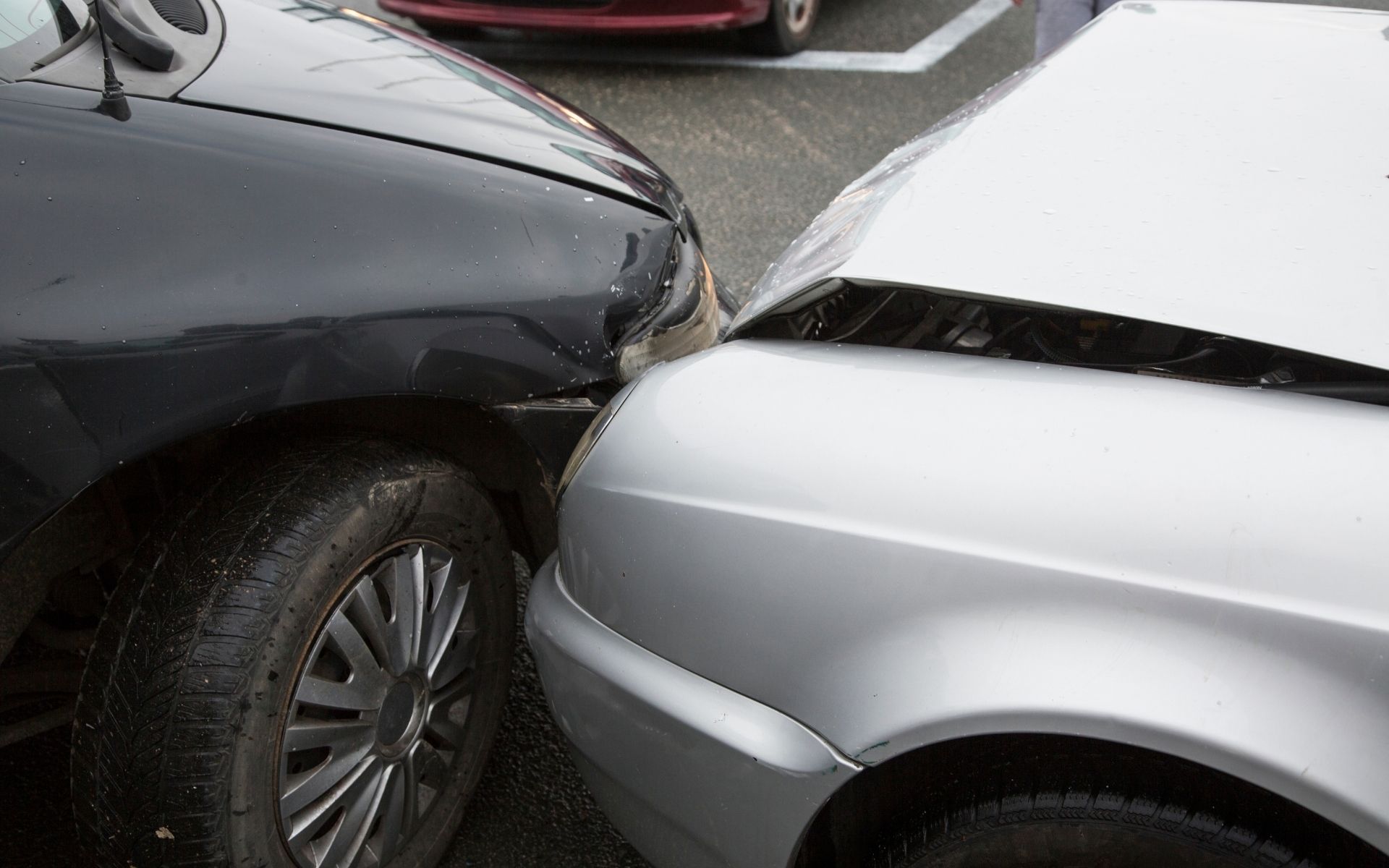
Wrong-way and lane-crossing cases rely on evidence showing how a vehicle entered opposing traffic and where the impact occurred. When drivers give conflicting accounts of the crash, objective evidence can help establish what happened.
Important evidence can include:
- Skid marks and gouge marks showing vehicle position and direction
- Traffic and surveillance camera footage
- Event data recorder (EDR), or ‘black-box,’ data recording speed, braking, and other available vehicle information
- Statements from drivers, passengers, and other witnesses
- Police accident reports and officer observations
- Accident reconstruction analysis based on the physical evidence
Some evidence can disappear soon after a collision. Surveillance footage can be overwritten, roadway marks can fade, and damaged vehicles can be repaired or scrapped, making early preservation important.
Preserving available evidence early can strengthen the investigation of a wrong-way crash. Call K L Sanchez Law Office at (646) 701-7990 for help taking the next steps after a head-on collision in Queens.
Google Review by
Dealing with the aftermath of a car accident was tough, but having this Keetick by my side made all the difference. Her skill in the courtroom and compassion during my recovery period were more than I could have asked for. Truly the best in Queens.
How Long Do You Have to File a Claim in Queens?
New York gives most people three years from the date of a collision to file a personal injury lawsuit underCPLR § 214. Missing the applicable deadline can prevent an injured person from pursuing the claim in court.
Shorter deadlines apply to certain claims involving public entities. For tort claims subject to General Municipal Law §§ 50-e and 50-i, a notice of claim must typically be served within 90 days, and the lawsuit must be filed within one year and 90 days of the event. Different requirements can apply to other public authorities, making it important to identify the responsible entity early.
The table below summarizes key deadlines relevant to a Queens head-on collision:
| Type of Claim | Deadline | Legal Basis |
|---|---|---|
| Personal injury against a private driver | 3 years from the crash date | CPLR § 214 |
| Municipal tort claim subject to §§ 50-e and 50-i | Notice within 90 days; lawsuit within 1 year and 90 days | General Municipal Law §§ 50-e, 50-i |
| Wrongful death claim | 2 years from the date of death | EPTL § 5-4.1 |
Waiting to address a filing deadline can put important legal rights at risk. Call K L Sanchez Law Office at (646) 701-7990 to discuss the deadline that applies to your Queens head-on collision claim.
Service Areas
K L Sanchez Law Office represents people injured in head-on collisions throughout Queens, including:
- Jackson Heights
- Elmhurst
- Corona
- Flushing
- Astoria
- Woodside
- Rego Park
- Forest Hills
Our team also represents injured clients in Kings County, Bronx County, New York County, Nassau County, and Suffolk County.
Google Review by
I just recently had an awesome experience with the team at K L Sanchez law office. The lawyer, Kettick Sanchez, was very professional and knowledgeable throughout the whole process, her assistant Kelly was also great at communicating and helping me with any concerns I had. Would definitely recommend their services due to their high quality of work and passion!
Get Experienced Legal Help After a Head-On Collision in Queens
A head-on collision can result in serious injuries, medical expenses, lost income, and insurance claims. Recovery can include medical treatment, rehabilitation, time away from work, and other expenses related to the crash. The extent of these losses depends on the injuries and circumstances of the collision.
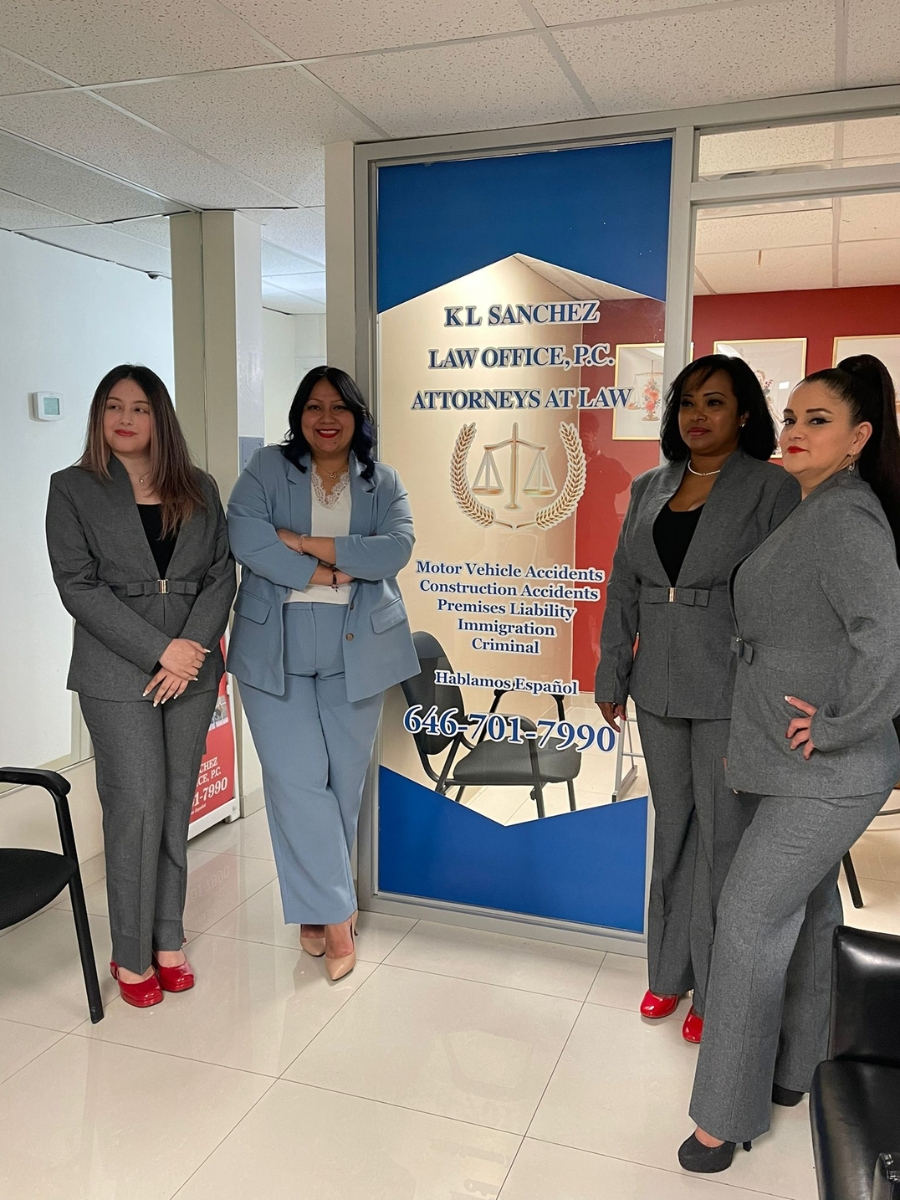
Keetick L. Sanchez represents people injured in head-on collisions throughout Queens and New York City. K L Sanchez Law Office investigates the circumstances of each crash, communicates with insurance companies, and handles the legal process on behalf of injured clients.
Call K L Sanchez Law Office at (646) 701-7990 for a free consultation about your Queens head-on collision claim. Our office at 37-06 82nd Street in Jackson Heights serves injured clients across Queens and throughout New York.
Google Review by
The legal office of Lawyer K L Sánchez, provided us with an excellent service with very qualified personnel, Lawyer Sánchez is a very professional, very qualified and very responsible person, in the same way Ms. Yenny is a very professional and qualified person, they They show interest and concern for your case and do not rest until it is 100% resolved, which I certainly recommend. For my part you have my gratitude and thanks.
Frequently Asked Questions About Head-On Collisions in Queens
What should I do immediately after a head-on collision in Queens?
Call 911 to report the crash and request medical assistance. When you are able, exchange license, registration, and insurance information with the other driver, document the scene, and seek medical care even when injuries are not immediately apparent.
Who is usually at fault in a head-on collision?
Fault often falls on the driver who crossed the center line or traveled the wrong way. However, another vehicle, a road hazard, or a mechanical failure can contribute to a lane departure, so the circumstances and available evidence must be reviewed.
Can I still recover damages if I was partly at fault?
Yes, depending on your share of fault. Under CPLR § 1411(b), recovery in certain New York motor vehicle injury claims is barred when the claimant’s fault is greater than the fault of the person, or the combined fault of the persons, from whom recovery is sought. When recovery is not barred, compensation is reduced by the claimant’s percentage of fault.
How much is my head-on collision case worth?
The value of a head-on collision claim depends on factors such as injury severity, medical expenses, lost income, future care needs, the extent of any lasting impairment, and available insurance coverage. Each claim requires an individual evaluation based on its facts and documented losses.
What if the at-fault driver was uninsured?
Uninsured motorist (UM) coverage can provide compensation when the at-fault vehicle is uninsured or in qualifying hit-and-run cases. When the at-fault driver has insurance but insufficient coverage, supplementary uninsured/underinsured motorist (SUM) coverage can provide additional protection, subject to the policy’s coverage limits and terms.