K L Sanchez Law Office
Who Must Yield at T-Intersections in New York?
At a T-intersection in New York, the driver entering from the stem road, or the road that ends, must yield to traffic on the through road. However, other right-of-way rules may apply depending on signs, signals, pedestrians, and vehicle movements. Left-turning drivers must yield to oncoming traffic when required; drivers must yield to pedestrians in crosswalks, and at an uncontrolled T-intersection, the driver on the left must yield to the driver on the right. Identifying the correct rule can help prevent crashes and clarify fault after an accident.
Queens car accident attorney Keetick L. Sanchez represents injured drivers, passengers, pedestrians, and cyclists across New York City. We also handle intersection accident cases throughout Queens, including the many T-intersections where residential streets meet the busy avenues of Jackson Heights.
This guide explains the yielding duties of stem-road and through-road drivers, uncontrolled intersections, driveways and parking lots, pedestrian and cyclist rights, how fault and no-fault insurance work, and what to do after a T-intersection crash. Call K L Sanchez Law Office, P.C. today at (646) 701-7990 to schedule a free consultation and protect your right to compensation.
Right-of-Way Rules in New York T-Intersections
A T-intersection forms when one road ends at another road, creating the shape of a “T.” The road that continues across the top of the T is usually the through road, while the road that ends is the stem road. Because traffic on the through road is already moving across the intersection, drivers coming from the stem road must yield before entering, crossing, or turning into that traffic.
How New York Traffic Law Views T-Intersections
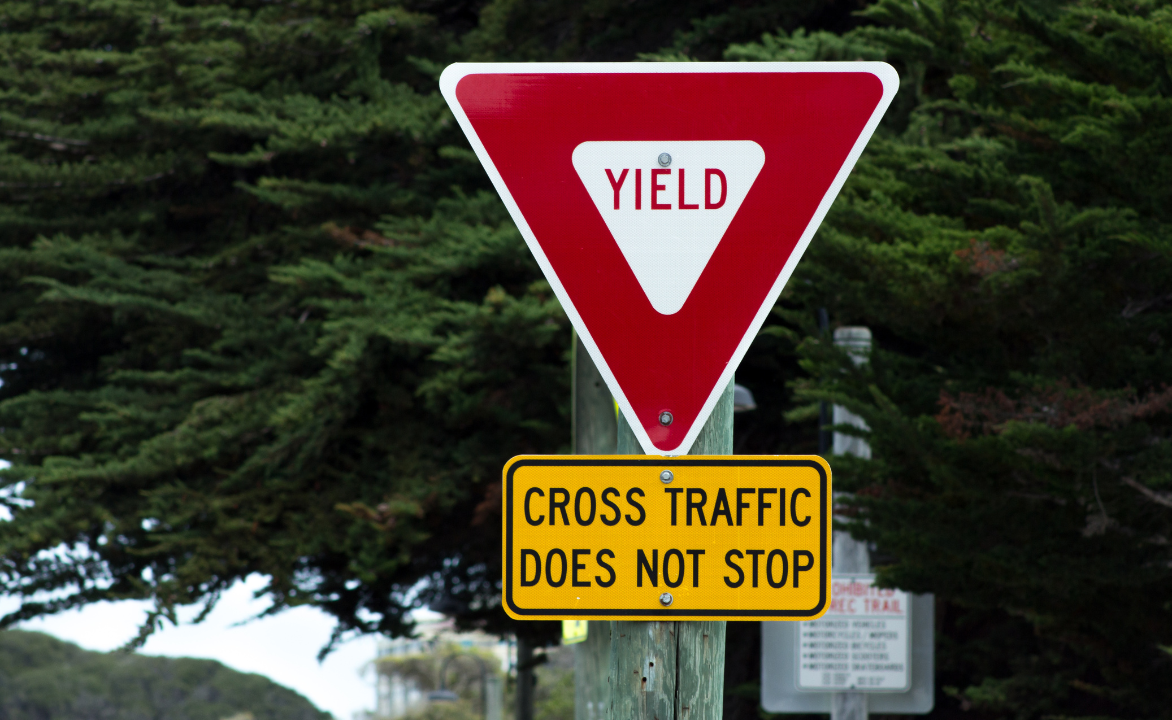
New York traffic law looks at T-intersections based on how traffic is controlled and which driver has a duty to yield. In most cases, the stem road has a stop sign, yield sign, or traffic signal because drivers on that road are entering traffic that is already moving on the through road. The through road continues without a stop or yield requirement at that point, so drivers coming from the stem road must wait until it is safe to proceed.
This configuration is designed to prioritize the flow of traffic on the through road while controlling access from the terminating road. These intersections are often equipped with additional safety features such as crosswalks for pedestrians, reflective signage, and advanced warning signs to alert drivers of the upcoming intersection.
Urban vs. Rural T-Intersections in New York
In dense areas like Queens, T-intersections are common in residential neighborhoods where smaller streets meet larger avenues or main roads. They also appear in commercial districts, where access roads or driveways from parking lots meet the main road. The high volume of traffic in these areas often calls for more controls, such as traffic lights or multiple stop signs, to manage vehicles and protect pedestrians.
In rural parts of the state, T-intersections often appear where local roads meet state highways or where secondary roads intersect with primary roads. These intersections have yield or stop signs rather than signals, and the higher speeds on rural highways make correct yielding just as critical for safety.
| Factor | Urban T-Intersections | Rural T-Intersections |
|---|---|---|
| Traffic control | Traffic lights and multiple stop signs | Yield or stop signs, few signals |
| Traffic volume | High | Lower |
| Typical speeds | Lower | Higher |
| Main risk | Pedestrian and cyclist conflicts | High-speed failure-to-yield crashes |
What Are the Stem Road Driver’s Yielding Duties?
When approaching a T-intersection from the stem (the bottom of the “T”), the driver’s primary responsibility is to yield to vehicles traveling on the through road. The through road carries the established flow of traffic, and vehicles on the stem road must defer to that movement. Under New York Vehicle and Traffic Law §1142, a driver approaching a stop or yield sign must yield to vehicles that are already in or approaching the intersection closely enough to be a hazard.
At a T-intersection controlled by a stop sign, the driver on the stem road must stop completely, check for oncoming traffic from both directions on the through road, and only proceed when it is safe. If a yield sign is present, the driver must slow down and be prepared to stop, but can proceed without a full stop when there is no traffic on the through road. This keeps traffic on the through road moving while preventing collisions by regulating entry from the terminating road.
When Must the Through-Road Driver Yield Instead?
While drivers on the through road usually have the right of way at T-intersections, they still bear the responsibility to drive safely. If a driver on the through road intends to turn left at the intersection, they must yield to oncoming traffic from the opposite direction. Under New York Vehicle and Traffic Law §1141, a driver turning left must yield to any approaching vehicle that is close enough to be a hazard, including vehicles traveling straight through or turning right.
For instance, if two vehicles arrive at the intersection at about the same time, one on the through road intending to turn left and another approaching from the opposite direction to go straight or turn right, the driver turning left must wait until it is safe to complete the turn. This rule reduces conflicts and lowers the risk of a crash. Even with the right of way, a through-road driver must stay alert and be ready to react to unexpected actions by others, especially where visibility is limited.
Who Yields at an Uncontrolled T-Intersection?
Some T-intersections, particularly on quiet side streets, have no stop sign, yield sign, or signal. Any driver approaching an intersection must yield to traffic that is already in the intersection.
When two drivers reach an uncontrolled intersection from different roads at about the same time, the driver on the left must yield to the driver on the right. Right of way is something you give, not something you take: even if the law says the other driver should yield, you must still stop or slow down to avoid a collision when they do not.
Key Takeaway: At an uncontrolled T-intersection, yield to any vehicle already in the intersection, and if you arrive at the same time as a cross-traffic driver, the driver on the left yields to the driver on the right.
Who Yields When Entering From a Driveway or Lot?
Under New York Vehicle and Traffic Law §1143, a vehicle entering a roadway from a driveway, alley, private road, or any place that is not a roadway must stop and yield the right of way to all traffic on the roadway and to pedestrians. This means the exiting driver must wait for a clear gap before entering the street. A right turn requires yielding to traffic approaching from the left, while a left turn requires yielding to traffic approaching from both directions. Pedestrians crossing the driveway or lot exit also have priority and must be allowed to pass first.
Key Takeaway: Drivers leaving a driveway, parking lot, or private road must stop and yield to everyone already on the through road, including pedestrians, before entering traffic.
Queens Car Accident Attorney, K L Sanchez Law Office, P.C.
Must Drivers Yield to Pedestrians and Cyclists?
Pedestrians have the right of way when crossing at marked or unmarked crosswalks, which means drivers, regardless of their direction of approach, must yield to them. When a pedestrian is crossing the through road at a T-intersection, drivers on both the through road and the terminating road must stop and allow the pedestrian to cross safely. Failure to yield to a pedestrian can result in fines and liability for any resulting accident.
Cyclists traveling on the through road have the right of way over vehicles approaching from the stem road. Drivers must be cautious when turning or proceeding through the intersection so they do not cut off or endanger cyclists. This is especially important across New York City, where cyclists are legally recognized as having rights and responsibilities similar to those of motor vehicles.
Who Is Liable for Failing to Yield in New York?
In New York, determining fault in T-intersection accidents involves assessing whether a driver failed to yield the right of way, which is a leading factor in these collisions. The state follows a modified comparative negligence system, meaning fault is distributed among multiple parties based on their respective degrees of negligence, provided your share of fault is not greater than the other driver’s.
When an accident occurs, the driver who failed to yield is held primarily responsible. If a driver on the stem road fails to stop or yield and collides with a vehicle that had the right of way, that driver is likely to be found at fault. Fault is not always clear-cut, however, and the other driver’s conduct can shift the distribution. Common factors include:
- Failing to yield the right of way: One driver enters, turns, or crosses the intersection when another driver has the legal right to proceed.
- Speeding or driving too fast for conditions: The other driver is over the speed limit or too fast for traffic, weather, or visibility conditions.
- Driving while distracted: Either driver is using a phone, looking away from the road, or otherwise failing to pay attention.
- Obstructing visibility at the intersection: Poor visibility, parked vehicles, signs, landscaping, or road design blocks a driver’s view of oncoming traffic.
If a court determines that you were 30 percent responsible due to speeding while the driver who failed to yield was 70 percent responsible, your damages would be reduced by 30 percent. And if you are found to be more than 50 percent at fault, you cannot recover any damages.
Key Takeaway: The driver who fails to yield bears primary fault, but New York’s modified comparative negligence system can assign a share of responsibility to another negligent driver, and bar them from recovering damages entirely if they hold the majority of the fault.
How Does No-Fault Insurance Affect Your Claim?
New York’s no-fault insurance system affects how payment works after a car accident, including crashes at T-intersections. After a covered accident, an injured person asks their own insurance company to pay for basic losses, no matter who caused the crash. These benefits can cover medical bills, lost wages, and certain other accident-related costs. Because the injured person does not have to prove fault first, no-fault coverage can help pay some expenses faster.
However, no-fault insurance does not cover every loss from a crash. An injured person may only bring a personal injury claim against the at-fault driver if the injury meets New York’s serious injury threshold under Insurance Law § 5102(d). This threshold includes injuries such as serious disfigurement, loss of a body part, a broken bone, permanent loss of use of a body part, or permanent limits on the use of a body part.
When the injury meets this threshold, the injured person can seek compensation beyond no-fault benefits. This includes compensation for pain and suffering and other losses that no-fault insurance does not cover. At this point, establishing fault becomes important because the claim is no longer only about benefits from the injured person’s own insurance company.
In covered New York motor vehicle injury cases, the amount a person can recover depends on how much fault is assigned to each driver. Under Insurance Law § 5104(a), the person deciding the case must determine fault before deciding whether the injury meets the serious injury threshold. This means a T-intersection accident claim may involve two main questions: who caused the crash, and whether the injury is serious enough to support a claim beyond no-fault benefits.
What Should You Do After a T-Intersection Crash?
What you do in the moments after a collision can affect both your health and your legal claim. After a crash, the following steps can help protect your safety, document what happened, and preserve evidence that can support a failure-to-yield claim.
- Call 911 immediately: Report the crash to emergency services and request medical help if anyone is injured.
- Photograph the crash scene: Take pictures of all vehicles, road conditions, and any signage or traffic signals controlling the intersection.
- Note vehicle positions: Record where each car stopped and which road each driver was traveling on.
- Exchange driver information: Swap driver’s license numbers, contact details, and insurance policies with the other driver.
- Collect witness contact details: Gather names and phone numbers from nearby pedestrians, cyclists, or other witnesses.
- Seek medical care promptly: Get evaluated by a doctor right away so your injuries are officially documented, even if you feel fine.
- Contact a personal injury attorney: Speak with a Queens car accident lawyer before providing a recorded statement to an insurance company.
Key Takeaway: After a crash, gather evidence when it is safe, get medical care, and speak with an attorney before discussing the claim with the insurance company.
Get Help from a Queens Car Accident Attorney
A crash caused by another driver’s failure to yield can leave you facing medical bills, lost income, and pressure from insurance companies while you are still trying to recover. These cases often depend on the details of the intersection, including traffic signs, signals, lane markings, right-of-way rules, and witness accounts.
Keetick L. Sanchez has investigated and prosecuted many personal injury cases and represents injured people throughout Queens and the rest of New York City. Our team can review the police report, examine the signage and traffic controls at the crash scene, and gather the evidence needed to show which driver should have yielded.
Call K L Sanchez Law Office, P.C. at (646) 701-7990 to schedule a free consultation. Our office is located at 37-06 82nd St #304, Jackson Heights, NY 11372, and we serve clients across Queens and New York City.
Frequently Asked Questions about Yielding at New York T-Intersections
Who has the right of way at a T-intersection in New York?
At T-intersections controlled by stop or yield signs, through-road traffic has the right of way. Under Vehicle and Traffic Law § 1142, the driver on the stem road must stop or yield before entering traffic. If an intersection has no signs or signals, standard right-of-way rules under Vehicle and Traffic Law § 1140 apply instead: yield to vehicles already in the intersection, or to the driver on your right if arriving at the same time.
Does the through-road driver ever have to yield?
Yes. A driver on the through road turning left must yield to oncoming vehicles going straight or turning right under Vehicle and Traffic Law § 1141. Drivers on the through road must also yield to pedestrians crossing in marked or unmarked crosswalks, as well as cyclists traveling along the through road or in dedicated bike lanes.
Who is at fault if a driver pulls out of a driveway and causes a crash?
A driver entering a roadway from a driveway, parking lot, alley, or private road must stop and yield to all traffic and pedestrians under Vehicle and Traffic Law §1143. That driver is found primarily at fault for a resulting collision.
Can I still recover damages if I was partly at fault?
Yes, but with limits. In New York motor vehicle accident cases, your recovery is reduced by your share of fault. For example, being 30 percent at fault reduces your award by 30 percent. You can still recover damages if your fault is not greater than the other driver’s, but if you are more than 50 percent at fault, you are barred from receiving recovery.
When can I sue the at-fault driver instead of using no-fault insurance?
You can file a personal injury lawsuit when your injuries meet the serious injury threshold under Insurance Law §5102(d), which includes fractures, significant disfigurement, and permanent limitations.
How long do I have to file a claim after a T-intersection accident?
New York allows three years from the date of the crash to file a personal injury lawsuit, but no-fault claims must be started earlier. Speaking with an attorney quickly helps protect every deadline that applies to your case.
Do You Need a Police Report for a Minor Fender Bender in New York?
The short answer is no. You don’t always need a police report for a minor fender bender in New York.
Is New York a No-Fault State?
Yes, New York is a no-fault state for car accidents. Your own auto insurance pays for your medical bills and
When to Get an Attorney for a Car Accident
Hiring a car accident attorney is worth considering any time your injuries are serious, fault is disputed, or the insurance
What Does an Insurance Adjuster Do in a New York Claim?
An insurance adjuster reviews insurance claims, evaluates the available evidence, and helps determine how the insurance company responds to a